
There is something about the ocean.
You can arrive at the beach feeling wound up, distracted, exhausted or carrying a head full of noise — and within a short time, something starts to shift.
You breathe a little deeper.
You look out at the horizon.
You hear the waves.
Your feet hit the sand. Maybe you get in the water. Maybe you swim, walk, float, move, play or simply sit and watch.
And somehow, you start to feel a little more like yourself again.
That simple but powerful shift is at the heart of what we call Ocean Therapy at TALAY.
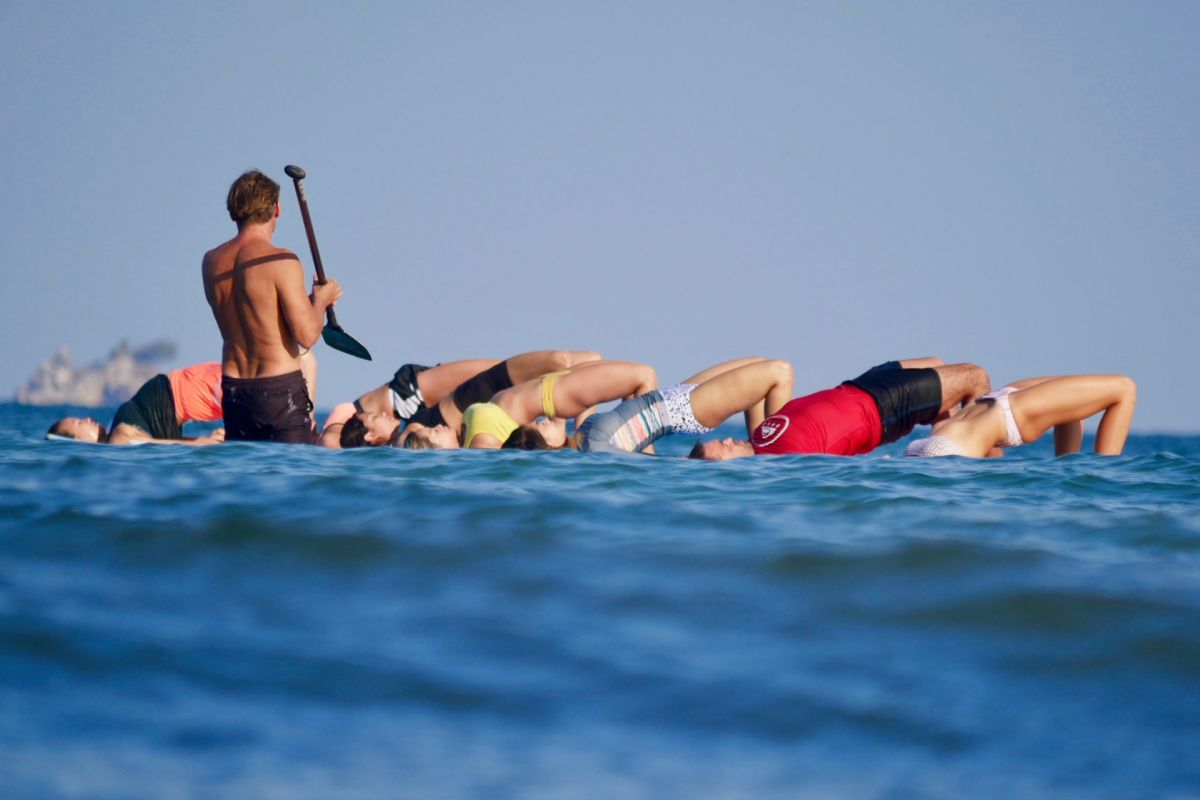
Ocean Therapy is an emerging approach to wellbeing that intentionally uses the ocean and coastal environment to support physical, emotional and psychological wellbeing. It can involve time in the water, movement, mindfulness, breathwork, nature immersion, swimming, creative practices, reflection, connection with others — and yes, sometimes surfing too.
But you don’t need to be a surfer to experience Ocean Therapy.
In fact, you don’t even need to be particularly good in the water.
At TALAY, the ocean is the setting, the connection point and the catalyst. The goal is to help people Rest, Reset, Reconnect and Renew — four ideas that sit at the heart of our Ocean Retreat in Thailand.
What Is Ocean Therapy?
There isn’t one universally agreed definition of Ocean Therapy yet.
And that’s worth saying.
The field is still developing, with researchers using a number of related terms including blue space, blue care, nature-based therapy, ocean-based wellbeing and surf therapy.
Ocean Therapy is the broader idea.
It is about intentionally using our relationship with the ocean and coastal environment as part of a wellbeing experience.
That might mean:
- Getting into the ocean and becoming comfortable in the water
- Swimming or floating
- Walking barefoot along the beach
- Mindful breathing beside the sea
- Moving your body outdoors
- Learning something new
- Spending time in nature
- Connecting with other people
- Sitting quietly and listening to the waves
- Journaling or reflecting after time in the water
- Surfing, for those who want to
- Simply giving yourself permission to slow down
The activity itself isn’t necessarily the therapy.
It’s the combination of the environment, the experience, the body, the mind and the intention behind it.
That’s what makes Ocean Therapy interesting.
Why Does the Ocean Make Us Feel Different?
Humans have always had a relationship with the sea.
Long before we had wellness retreats, meditation apps and expensive city spas, people lived beside water, travelled across it, fished it, swam in it and depended upon it.
The sea wasn’t somewhere you went for a holiday.
It was part of life.
There is an old story from Ancient Greece that captures something of this relationship beautifully.
When Xenophon and the Greek army of the Ten Thousand finally reached the sea after their long retreat from Persia, the soldiers famously cried:
“Thalassa! Thalassa!” — “The sea! The sea!”
They could see the sea again. They knew they were getting closer to home.
That emotional response to the sea is thousands of years old.
And perhaps modern life has taken us a little too far away from it.
We spend much of our days sitting indoors, staring at screens, moving between buildings, traffic, notifications and artificial environments.
We are incredibly good at adapting.
But adapting isn’t the same thing as thriving.
Put someone who spends most of their life in a busy city onto a quiet tropical beach and watch what happens.
At first, they might still be checking their phone.
Then they start looking around.
They hear the waves.
They walk a little slower.
They sleep better.
They start noticing things again.
Give them a few days and quite often the reaction changes from:
“This is nice.”
to:
“I don’t want to leave.”
We see this at TALAY.
And increasingly, science is giving us a better understanding of why natural environments — including coastal and marine environments — can have such a powerful effect on wellbeing.
The Science Behind Ocean Therapy
The science is still developing, but researchers have been studying the relationship between people and natural water environments for years.
The broader field of blue-space research looks at how environments involving rivers, lakes, oceans and other bodies of water may influence human health and wellbeing.
Research into blue-space interventions has found generally positive evidence for mental and psychosocial wellbeing, although the studies vary considerably and researchers continue to call for stronger evidence.
More recent research continues to explore the relationship between blue spaces and mental health.
So while we shouldn’t claim that simply being beside the sea magically fixes everything, there is a growing scientific interest in something many of us have intuitively understood for a very long time:
Being around water can change how we feel.
And there are several possible reasons why.
The Ocean Gives the Nervous System Something Different
Modern life can keep our nervous system switched on.
Emails.
Deadlines.
Traffic.
Social media.
News.
Work.
Financial pressure.
Family responsibilities.
Notifications.
More notifications.
Even when there isn’t an immediate physical danger, the body can spend a lot of time responding to perceived demands.
Our autonomic nervous system is constantly balancing activation and recovery.
The sympathetic nervous system helps mobilise us when we need to act.
The parasympathetic nervous system supports rest, digestion and recovery.
A healthy nervous system isn’t one that is permanently relaxed.
It’s one that can move between states appropriately.
This is one of the ideas behind the TALAY approach.
We’re not trying to eliminate stress from someone’s life.
That’s impossible.
Stress is part of being human.
Instead, we’re interested in helping people rediscover the ability to come back down.
To rest.
To breathe.
To reconnect with their body.
To feel safe enough to be present.
To move again.
To laugh.
To connect with other people.
To experience something that isn’t another screen.
That is what we mean when we talk about a nervous system reset at TALAY.
The Ocean Gets You Out of Your Head and Back Into Your Body
One of the things we love about the ocean is that it is incredibly difficult to ignore.
The water is moving.
The waves are changing.
The temperature is different.
The sand feels different beneath your feet.
The wind changes.
You have to pay attention.
Even something as simple as walking into the water can become a surprisingly powerful exercise in presence.
Notice the first touch of the water on your feet.
Then your ankles.
Your legs.
Your stomach.
Your chest.
Notice your breathing.
Notice the sound.
Notice the movement.
For a few minutes, there isn’t much room left for yesterday’s argument, tomorrow’s meeting or the hundredth scroll through Instagram.
You’re here.
Right now.
That is a very simple form of grounding — and it is one of the reasons we use sensory and ocean-based practices at TALAY.
You Don't Have to Surf
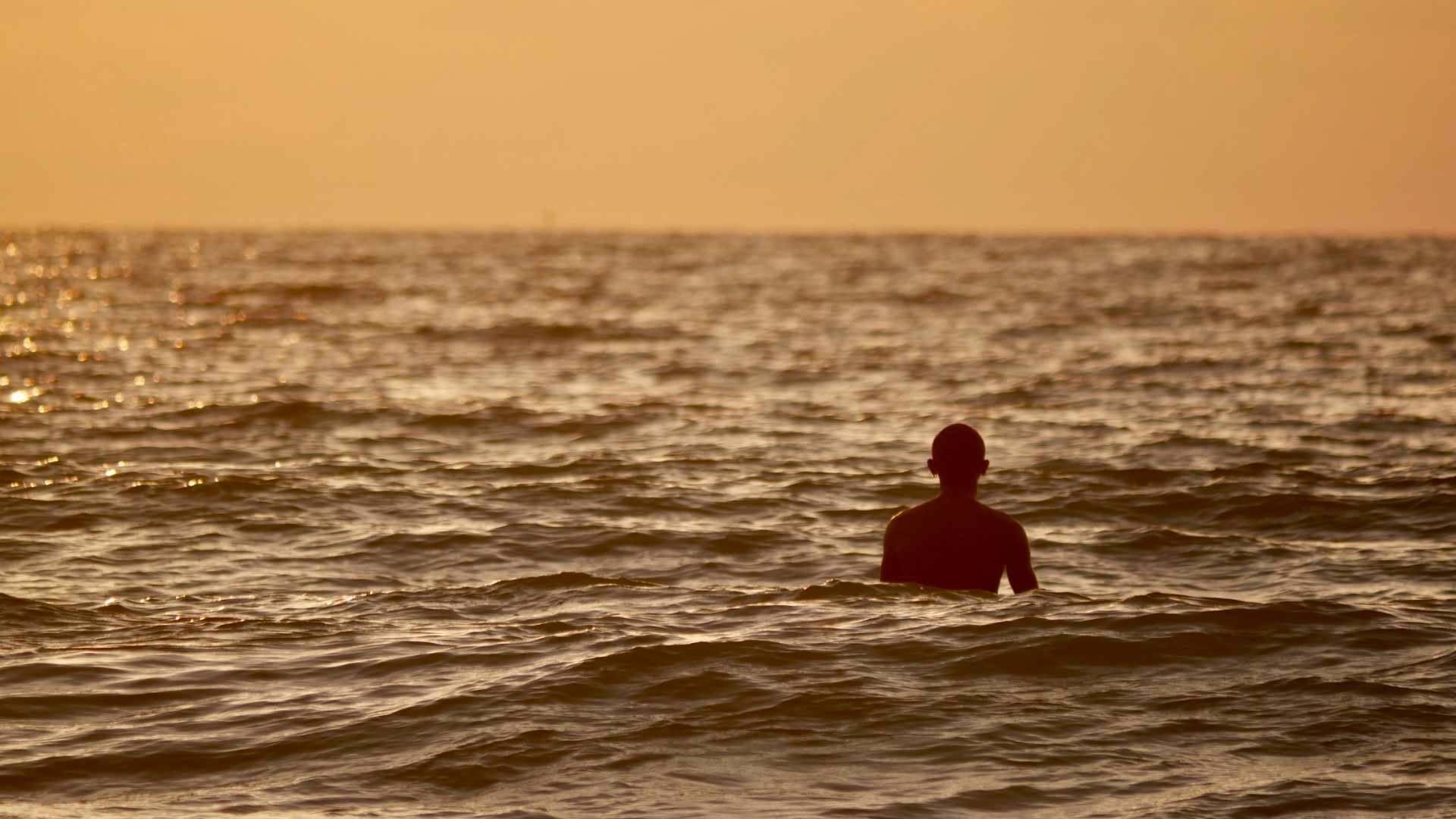
This is an important distinction.
Ocean Therapy is not Surf Therapy.
Surf Therapy is one specific approach that combines surfing or surf instruction with structured activities intended to support psychological, physical and psychosocial wellbeing.
Ocean Therapy is broader.
Surfing can be part of it.
But it is only one piece of the picture.
At TALAY, an Ocean Therapy session might involve movement, mindfulness, breathwork, ocean immersion, sensory grounding, reflection, nature connection or simply spending intentional time beside the water.
For someone who loves surfing, a wave might be exactly what they need.
For someone else, floating quietly in the ocean might be more meaningful.
Another person might prefer a beach walk, a breathing exercise or sitting on the sand listening to the waves.
There is no prize for being the best surfer.
This isn’t about performance.
It’s about connection.
What Happens When We Slow Down?
This is where Ocean Therapy becomes particularly interesting.
Many people arrive at a retreat believing they need to do more to feel better.
More exercise.
More productivity.
More goals.
More self-improvement.
Sometimes what we actually need is to create enough space to notice what is already going on.
The ocean naturally creates that space.
There is rhythm.
There is repetition.
There is movement and stillness.
The waves come in.
The waves go out.
You don’t have to make them happen.
You just have to be there.
That rhythm can become a powerful anchor for attention.
And when we’re able to pay attention to what is happening in our body and environment, we can sometimes begin to recognise things we’ve been carrying without really noticing them.
Stress.
Tension.
Grief.
Fatigue.
Frustration.
Restlessness.
Or simply the feeling that we’ve been living on autopilot.

Ocean Therapy and Mental Wellbeing
Mental wellbeing is much broader than simply not having a mental illness.
The World Health Organization describes mental health as a state of wellbeing that helps people cope with life’s stresses, realise their abilities, learn and work well, and contribute to their communities.
That’s a useful way of thinking about Ocean Therapy.
We aren’t trying to promise a cure.
We’re interested in creating the conditions where people can reconnect with themselves, their bodies, other people and the natural world.
That can be particularly valuable during periods of stress, burnout, major life transitions or when someone simply feels disconnected from the way they want to live.
For people experiencing significant psychological difficulties, professional mental-health care remains essential.
Ocean Therapy can potentially sit alongside that care — not replace it.
At TALAY, we believe knowing where the boundaries are is just as important as knowing what we can offer.
Why the Ocean Can Be Such a Powerful Setting
There is another piece that is easy to overlook.
The ocean is not a controlled environment.
You can’t tell the waves what to do.
The wind changes.
The tide changes.
Conditions change.
Sometimes the water is calm.
Sometimes it isn’t.
And learning to be comfortable with a little uncertainty is part of being human.
That can make the ocean a fascinating environment for developing presence, adaptability and resilience.
You learn to pay attention.
You respond.
You adjust.
You try again.
You don’t control everything.
And that’s okay.
In many ways, the ocean mirrors life.
Ocean Therapy Is Also About Connection
Modern life can be strangely isolating.
We can be connected to thousands of people online and still feel completely disconnected in real life.
That’s why community is such an important part of the TALAY experience.
Our retreat isn’t designed around people sitting silently in separate rooms doing individual wellness activities.
We eat together.
We move together.
We get into the ocean together.
We talk.
We laugh.
We play.
We share stories.
Sometimes we have deeper conversations.
Sometimes we talk absolute rubbish.
Both are important.
That sense of belonging — of being around other people without having to perform — is a big part of what makes the experience different from simply booking a hotel beside the beach.

Ocean Therapy Is Not a New Idea
The modern term may be relatively new, but the idea of using the sea for restoration certainly isn’t.
European seaside bathing became increasingly popular as a health practice during the 18th and 19th centuries.
People travelled to coastal towns specifically to experience seawater, fresh air and bathing.
Long before that, ancient cultures recognised the restorative qualities of water and built bathing traditions around it.
And perhaps the deeper truth is even older.
Humans evolved in relationship with natural environments.
For much of our history, life was lived outdoors, with weather, water, sunlight, plants, animals and natural rhythms all playing a much bigger role than they do for many of us today.
We haven’t stopped being human just because our environment has changed.
Our bodies still respond to light.
Movement.
Temperature.
Sound.
Nature.
Social connection.
Rest.
And water.
What Might an Ocean Therapy Experience Look Like?
There is no single Ocean Therapy formula.
At TALAY, we use a rotating daily rhythm rather than a rigid program.
Our days are built around four simple ideas:
Rest
Creating space for sleep, stillness, digital detox and simply doing less.
Reset
Using ocean experiences, movement and mindfulness to reconnect with the body and support nervous system regulation.
Reconnect
Building genuine connection with ourselves, other people and the natural environment.
Renew
Finding courage, clarity, curiosity and joy through movement, play, learning and new experiences.
Some days might include an ocean immersion session.
Another might involve movement or breathwork.
Another could include meditation, nature immersion, creative practice or reflection.
And there is deliberately plenty of space in between.
Because rest is not wasted time.

What If I'm Not a “Wellness Retreat” Person?
Honestly, that’s okay.
TALAY isn’t designed around sitting cross-legged in silence for seven days drinking green juice.
We like yoga.
We like mindfulness.
But we also like swimming, laughing, exploring, eating good food, playing games, having a cold drink at sunset and getting sandy.
Ocean Therapy doesn’t have to feel clinical.
It doesn’t have to feel spiritual.
It doesn’t have to feel like hard work.
It can simply be a few days of being human in a really good environment.
And sometimes that is exactly what people need.
Can Simply Listening to the Ocean Help?
You don’t even necessarily need to be in the ocean.
The sound of waves is one of the easiest ways to bring a little bit of the ocean into everyday life.
For someone living far from the coast, listening to ocean sounds while breathing slowly, meditating or simply resting can become a useful grounding practice.
It isn’t the same as actually being at the beach — obviously.
But the rhythmic sound can provide a simple sensory anchor.
Close your eyes.
Listen.
Breathe.
Let your attention follow the rise and fall of the sound.
You don’t have to achieve anything.
Just listen.
So, What Is Ocean Therapy Really About?
For us, it comes back to something pretty simple.
People need places where they can slow down, feel safe, move their bodies, connect with others and remember what it feels like to be present.
The ocean happens to be one of the most powerful environments we know for creating that opportunity.
It gives us movement.
It gives us rhythm.
It gives us challenge.
It gives us stillness.
It gives us space.
And sometimes, it gives us a perspective that is hard to find anywhere else.
The science around Ocean Therapy is still developing. We don’t pretend that every claim made about the ocean has been proven, and we certainly don’t believe the ocean replaces professional medical or psychological care.
But there is enough emerging research — and enough lived human experience — to take the relationship between people and the ocean seriously.
And at TALAY, that’s exactly what we’re interested in exploring.
Not just a beach holiday.
Not just a surf trip.
Not just another wellness retreat.
A chance to Rest. Reset. Reconnect. Renew.
And maybe, after a few days beside the Andaman Sea, to go home feeling a little more like your true self.
The ocean is the therapy. TALAY is the space.
Quick Answer
What is Ocean Therapy?
Ocean Therapy is an emerging approach to wellbeing that intentionally uses the ocean and coastal environment to support physical, emotional and psychological wellbeing. It can include ocean immersion, swimming, movement, mindfulness, breathwork, nature connection, reflection, social connection and surfing.
You don’t need to be a surfer to experience Ocean Therapy.
At TALAY in Thailand, our approach is built around four principles: Rest, Reset, Reconnect and Renew.
Ocean Therapy at a Glance
What is it?
An ocean-based approach to wellbeing using the marine environment, movement, sensory experiences, nature and connection.
Do I need to surf?
No. Surfing is only one possible activity.
Do I need to be fit?
No. Experiences can be adapted to different abilities.
Is it the same as Surf Therapy?
No. Surf Therapy is a more specific approach; Ocean Therapy is broader.
Is it medical treatment?
No. Ocean Therapy should not replace appropriate medical or psychological care.
Where does TALAY offer Ocean Therapy?
At our Ocean Retreat on Natai Beach, Phang Nga, Thailand.
What is TALAY’s approach?
Rest. Reset. Reconnect. Renew.
Frequently Asked Questions
Ocean Therapy is an emerging therapeutic approach to wellbeing that intentionally uses the ocean and coastal environment to support physical, emotional and psychological wellbeing.
Potential benefits relate to several aspects of the experience, including being in nature, physical movement, sensory stimulation, relaxation, social connection and opportunities to become more present. Research into blue spaces and nature-based interventions is continuing to develop.
No. Surf Therapy specifically incorporates surfing or surf instruction into a structured wellbeing or therapeutic program. Ocean Therapy is broader and can include many ocean-based activities without surfing.
Absolutely not. Ocean Therapy isn’t about being a surfer. Swimming, walking, floating, breathing, mindfulness, nature connection and simply spending intentional time beside the ocean can all form part of an Ocean Therapy experience.
Research into blue spaces, nature-based interventions and surf therapy is growing. There is encouraging evidence in several areas, but the research is still developing and Ocean Therapy should not be presented as a proven cure or replacement for professional healthcare.
Ocean-based experiences may provide an opportunity to slow down, move the body, reconnect with nature and shift attention away from everyday pressures. At TALAY, supporting people to move from a state of constant stimulation towards greater rest and regulation is an important part of our approach.
Ocean Therapy may complement appropriate professional care, but it should not replace psychiatric treatment or structured psychotherapy. Anyone experiencing significant psychological distress should seek appropriate professional support.
TALAY offers an Ocean Retreat experience on Natai Beach in Phang Nga, on Thailand’s Andaman coast. Very close to Phuket but not in the chaos of Phuket’s business
TALAY combines ocean experiences, movement, nature, connection, mindfulness, rest and other wellbeing activities around four principles: Rest, Reset, Reconnect and Renew.
Yes. Being beside the ocean, walking along the beach, listening to waves, practising mindfulness and connecting with the natural environment can all be part of an ocean-based wellbeing experience.
Why TALAY?
TALAY is an Ocean Retreat on Natai Beach in Phang Nga, Thailand, created around the belief that the ocean can be more than a beautiful place to visit.
It can be a place to slow down.
To reconnect.
To move.
To play.
To rest.
And to remember what it feels like to be fully present.
Our Ocean Therapy approach brings together the natural environment, movement, mindfulness, ocean experiences and human connection.
Rest. Reset. Reconnect. Renew.